The Hazaragi Dress:
Embroidery, Colours & How to Wear It
Everything you need to know about the traditional dress of Hazara women, from the embroidered yakhan to choosing the right one for Eid, Nowruz or a wedding.
You recognise a Hazaragi dress from across the room: a solid, saturated colour, crisp geometric embroidery, and a full skirt that swings when you walk. It is one of the most distinctive Afghan styles. Once you know its parts and patterns, choosing the right one gets much easier.
- What: the traditional dress of Hazara women from Hazarajat, central Afghanistan.
- Signature: an embroidered yakhan (chest panel) with geometric patterns, sometimes trimmed with coins.
- Motifs: diamonds, eight-point stars, zigzags and flowers, often in white thread on a solid colour.
- The set: a dress with a pleated skirt, embroidered tunban (trousers), and a chador or dupatta.
- Worn for: Eid, Nowruz, weddings, henna nights and cultural events.
01 — What Is a Hazaragi Dress?
"Hazaragi" simply means "of the Hazara". The Hazara are one of Afghanistan's largest ethnic groups, with roots in Hazarajat, the mountainous centre of the country around Bamyan, Daykundi and parts of Ghazni, Wardak and Uruzgan. Today Hazara families also live in Kabul, Quetta, Iran, Europe and Australia, and the dress has travelled with them.
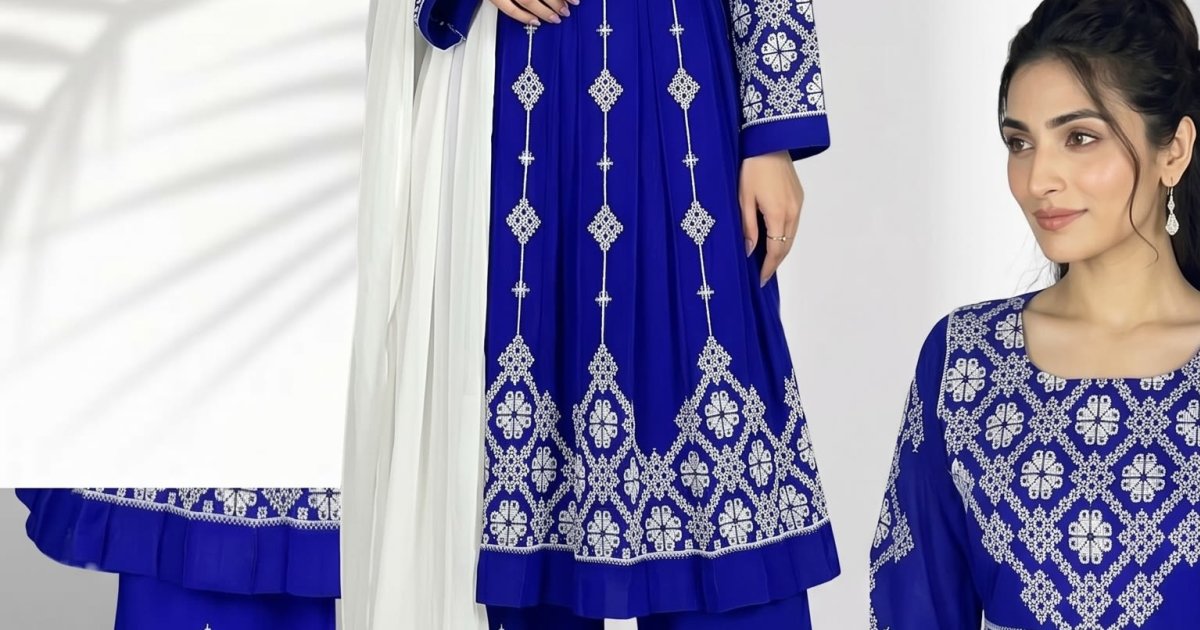
What makes the dress unmistakable is its embroidery. Where many Afghan styles pile on mirrors, coins and colour, a Hazaragi dress is about order: rows of diamonds, stars and zigzags stitched in a steady rhythm across the chest, cuffs and hem. Women traditionally embroidered these pieces at home, often for their own trousseau, and the patterns were passed from mother to daughter.
02 — Anatomy of a Hazaragi Dress
Every Hazaragi dress is built from the same six parts. Knowing them helps when you read product descriptions or talk to a tailor, and it shows you where the handwork, and the price, actually sits.
- 1YakhanThe embroidered chest panel, and the most detailed part of the dress. Sometimes finished with coins or beads along the bottom edge.
- 2Sleeves & cuffsLong, roomy sleeves with embroidered bands at the wrist.
- 3WaistbandAn embroidered band that separates bodice and skirt and defines the waist.
- 4Pleated skirtA long, full skirt that swings open as you move, often with scattered motifs.
- 5Hem borderA wide embroidered band at the hem, usually echoing the yakhan pattern.
- 6TunbanWide trousers with matching embroidery at the ankle.
The yakhan is where most of the work goes. On our Handcrafted Yakhan Hazaragi dress, the yakhan alone takes about a week to embroider by hand, with small coins sewn along the neckline.
03 — Embroidery & Motifs
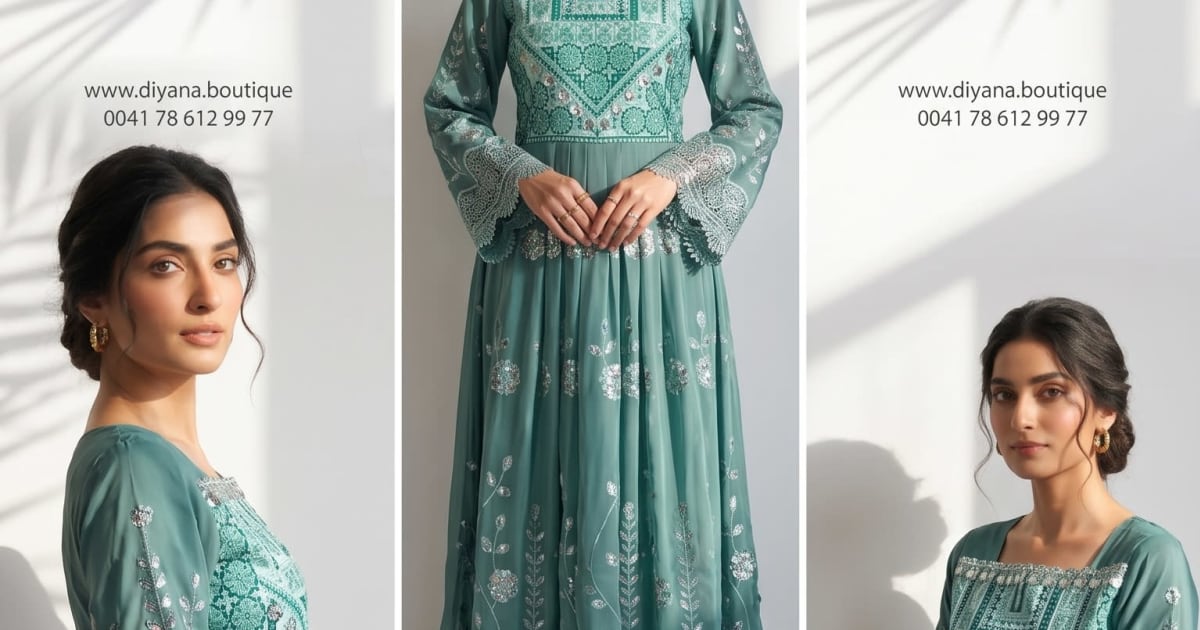
Hazaragi embroidery is mostly counted work: the stitcher follows the weave of the fabric so every shape comes out even. That is why the patterns look so crisp and geometric. These are the four motifs you will see most.
Nested diamonds in rows, the backbone of most yakhan panels.
Flower-like stars repeated across the chest and hem.
Mountain-like lines that frame cuffs, waistband and trousers.
Small coins or beads along the yakhan for festive pieces.
Look at the colours. Classic Hazaragi embroidery uses one thread colour, often white, on one fabric colour. If you see mirrors, many colours and lots of coins at once, you are probably looking at a Kuchi or Gand dress. Our Kuchi dress guide explains every one of those details.
04 — Hazaragi vs Other Afghan Styles
Hazaragi, Kuchi, Gand and Kandahari are the four main styles in our shop. Here is how they compare side by side.
| Hazaragi | Kuchi | Gand | Kandahari | |
|---|---|---|---|---|
| Origin | Hazarajat, central Afghanistan | Kuchi nomads | Festive dress worn across Afghanistan | Kandahar, southern Afghanistan |
| Embroidery | Geometric and even: diamonds, stars, zigzags | Dense and multicoloured, with mirror work | Heavy, with coins and mirrors | Fine and tight, often silk |
| Embellishment | A few coins or beads on the yakhan | Mirrors, coins, beads, tassels | Lots of coins, mirrors, sequins | Minimal, the stitching is the star |
| Overall feel | Clean, graphic, elegant | Bold and energetic | Lavish and celebratory | Delicate and formal |
| Best for | Eid, Nowruz, wedding guest, cultural events | Henna night, attan, photos | Nikkah, big celebrations | Formal occasions |
Curious about where these traditions come from? Our guide on why Afghan clothing never goes out of style covers the regional embroidery traditions.
05 — Colours & Their Meaning
Hazaragi dresses are made in strong, saturated colours, which is what makes the white embroidery stand out. Here is how the colour options across our current Hazaragi range break down.
For the deeper story behind each Afghan colour, read Afghan Fashion 2026: Colours, Influencers & Trends.
06 — What to Wear When
A Hazaragi dress works for almost every Afghan celebration. The trick is matching the amount of embroidery to the occasion.
| Occasion | What to choose | Colour tip | Embroidery |
|---|---|---|---|
| Eid | 3-piece set with chador | Green, royal blue | Medium |
| Nowruz | Floral-motif dress with a full skirt | Green, pink, turquoise | Medium |
| Wedding guest | Dress with a rich yakhan or sequins | Purple, turquoise, burgundy | Heavy |
| Henna night / engagement | Festive Hazaragi wedding dress | Green, pomegranate red | Heavy |
| Family gathering | Simple set with white embroidery | Blue, purple | Light to medium |
| Cultural event / photoshoot | Dress with a coin-trimmed yakhan | Bold jewel tones | Heavy |
A Hazaragi dress is a beautiful guest outfit. Just keep clear of white and bridal red. Our Afghan wedding dress code guide covers every event of the wedding, and if you are going to a nikkah, see what to wear to a nikkah.
07 — Styling Tips
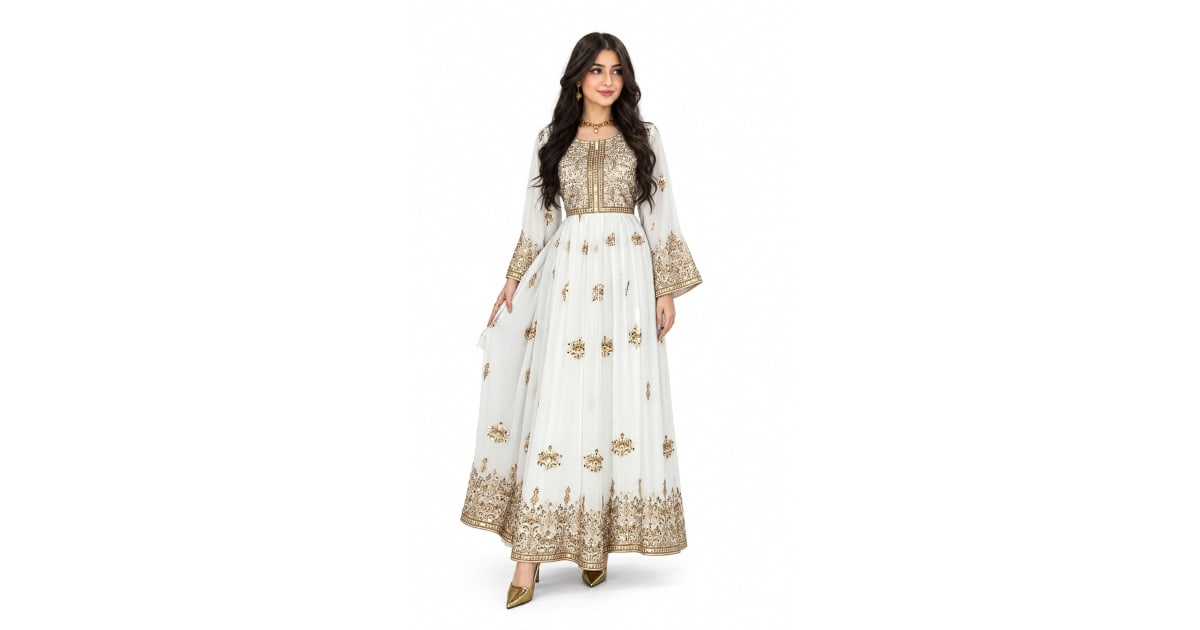
Because the embroidery is so graphic, a Hazaragi dress needs very little help. Let the yakhan lead and keep everything else simple.
- Wear a plain chador or dupatta in the embroidery colour
- Choose classic silver or gold jewellery
- Wear simple shoes with a low heel under the long skirt
- Show the pleated skirt in motion in photos
- Check the size guide before ordering
- Layer a patterned dupatta over a busy yakhan
- Wear big statement necklaces over the yakhan
- Skip the waistband, as it gives the dress its shape
- Wear white or bridal red as a wedding guest
- Leave ordering for a wedding to the last week
A Hazaragi dress does not need to shout. The embroidery already tells the story.
— Diyana Boutique08 — Buying, Sizing & Delivery
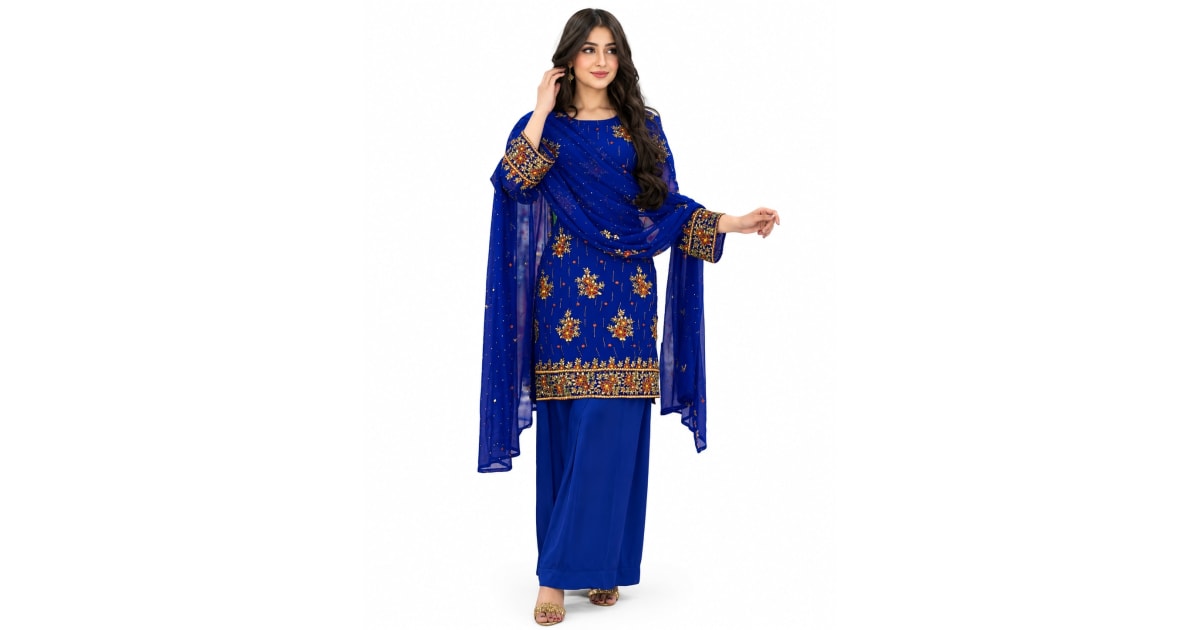
Our Hazaragi dresses range from €90 to €160. Price follows the handwork: a simple two-piece set costs less than a dress with a hand-embroidered, coin-trimmed yakhan. Every option below ships free.
Two-piece and three-piece sets with classic Hazaragi embroidery. A good first Hazaragi dress.
Fuller embroidery and more colour choices. A good fit for Eid and for wedding guests.
Handcrafted yakhan and wedding-ready detailing, made for the photos you will keep.
When to order
- 1Day 0OrderPick your size and colour.
- 2Days 1–7PreparationA few days; about a week for a handmade yakhan.
- 3Weeks 1–3Free shippingTracked, arrives in 2–3 weeks.
- 4Weeks 4–8Your eventOrder 1–2 months ahead for weddings.
Hazaragi dresses are cut with a relaxed bodice and a full skirt. Size by your bust and waist, and size up if you are between two sizes. Full measurements are in our size guide.
09 — Care Guide
Hand embroidery lasts for decades if you treat it gently. Dry clean anything with coins, sequins or beads. Thread-only pieces can be hand washed in cold water with a mild detergent: no wringing, dry flat inside out, and iron inside out on low heat. Store the dress folded in a cotton bag rather than on a hanger, so the weight of the skirt does not pull on the yakhan.
10 — Frequently Asked Questions
Handmade Hazaragi dresses and sets from €90, with free worldwide shipping.