What to Wear to a Nikkah:
The Complete Outfit Guide
The nikkah is quieter and more modest than the wedding reception — here is how to dress for it, whether you are the bride, the groom's family, or a guest.
A nikkah is the Islamic marriage contract — the moment a couple is officially married in the eyes of faith and family. It usually happens before the big wedding reception (shab-e-arosi), sometimes days or even months earlier, and it looks nothing like the reception.
- The nikkah is the religious marriage contract — modest, calm, and family-focused, not a party.
- Brides usually choose green, soft pastels, or a modest white/ivory gown, with lighter embroidery than the reception dress.
- Hair is covered with a dupatta, hijab, or embroidered shawl during the ceremony.
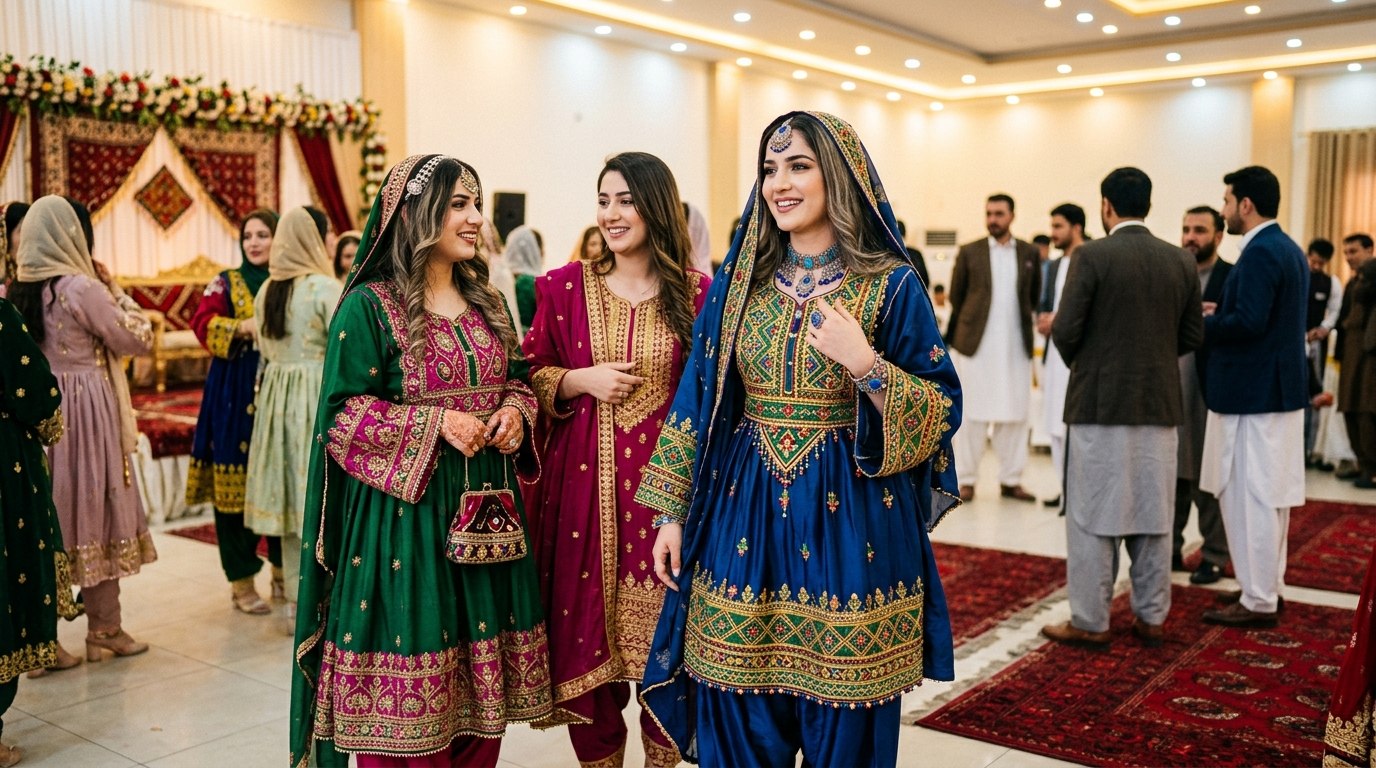
- Guests should dress modestly and semi-formally — save your boldest, most heavily embroidered outfit for the reception.
- Avoid outfits that are too revealing, too casual, or that compete with the bride's colors.
01 — What a Nikkah Really Is
There is no loud music, no dance floor, and no hours of photography under bright lights. It is a mosque, a living room, or a small hall filled with close family, a religious officiant, signatures, and prayers. Because the tone is so different, the outfit is different too. This is not the moment for your heaviest, most dramatic gown — that comes later.
A nikkah outfit should feel calm, modest, and respectful, while still marking a genuinely special day.
Many Afghan families hold the nikkah and the reception on completely different days, sometimes weeks apart. If you are attending both, plan two separate outfits — a modest one for the nikkah, and your most festive look for the reception. Our Afghan Wedding Fashion Guide covers exactly what to wear to the reception.
02 — The Bride: What to Wear
The nikkah bride is elegant, not overwhelming. Her outfit should photograph beautifully but still let her sit comfortably through readings, signatures, and long conversations with family.
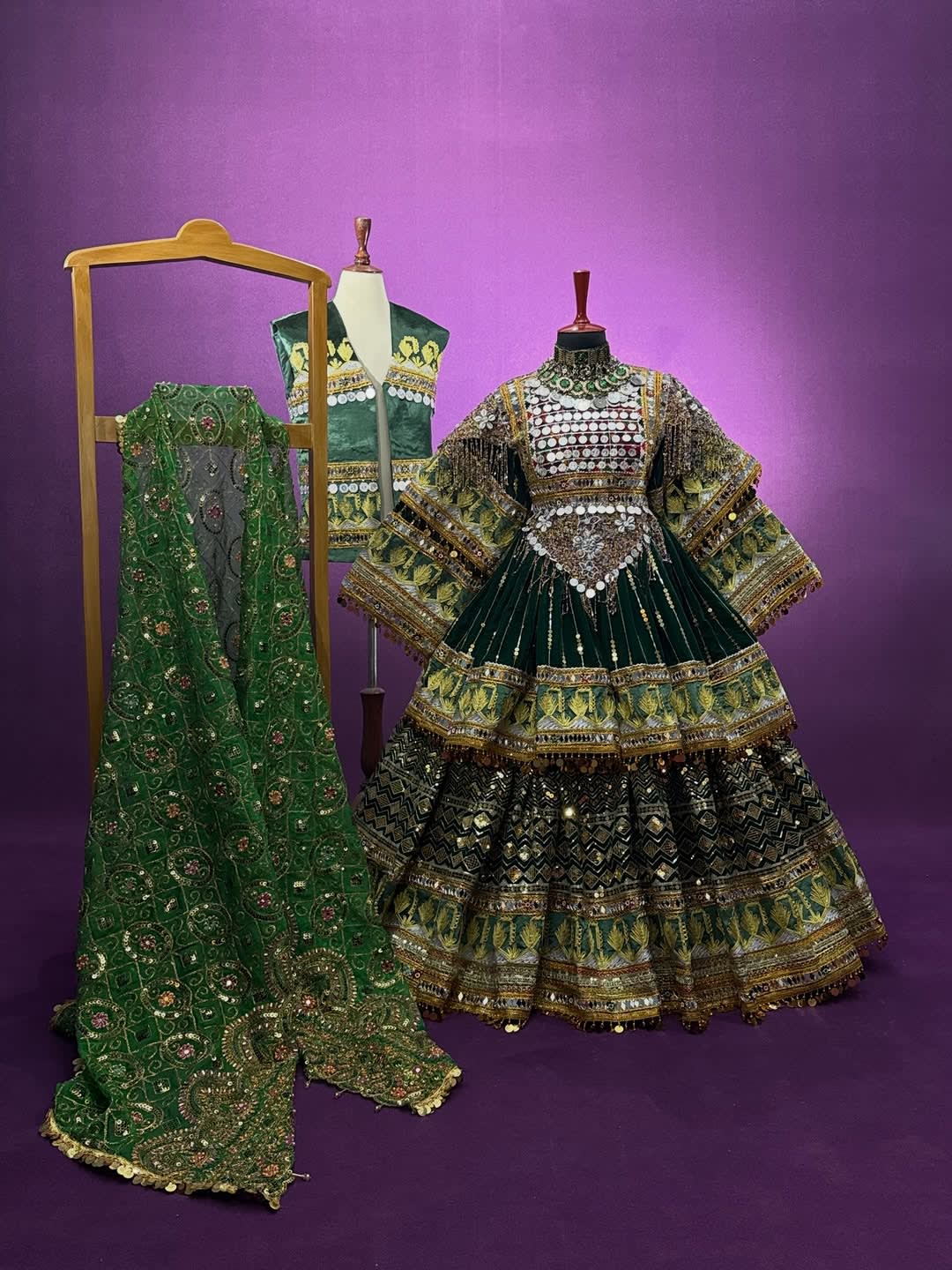
Green is the color most linked to the nikkah — it represents new beginnings and is considered auspicious in Islamic tradition. A floor-length green dress with light gold thread detail is the classic choice.
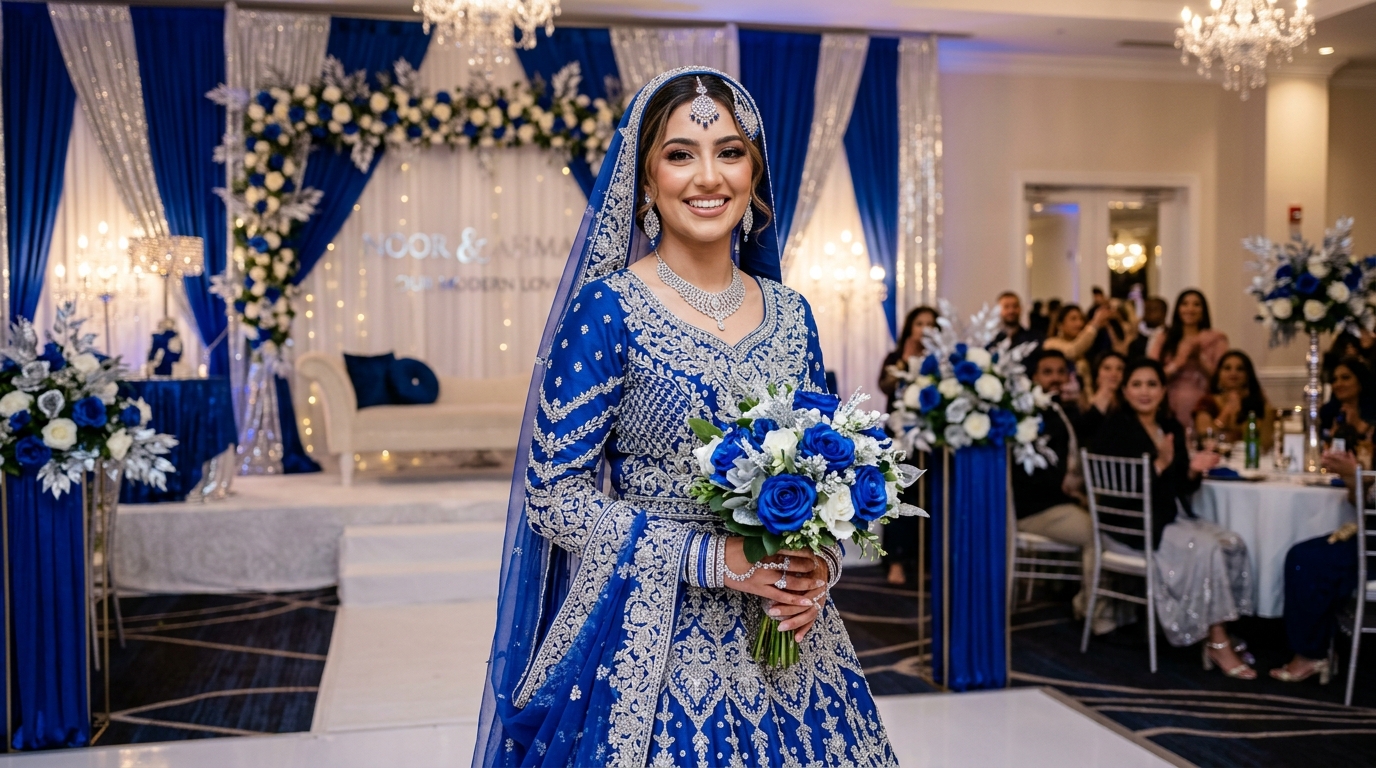
Many diaspora brides now choose a modest ivory, blush, or champagne gown for the nikkah, then change into a bold red or crimson dress for the reception later.
Some brides wear a mother's or grandmother's nikkah dress, lightly altered. It carries meaning no new dress can replicate — and it always draws the most compliments.
Whichever direction you choose, keep the embroidery lighter than your reception dress, and always plan a scarf, dupatta, or embroidered shawl to cover your hair for the ceremony itself.
03 — Best Colors for a Nikkah
Color choice for a nikkah is calmer than for a wedding reception. Here is what Diyana Boutique brides reach for most often when shopping for their nikkah outfit.
Deep red and crimson are usually saved for the reception, where the bride is the most dramatic figure in the room. Wearing them at the nikkah is not wrong, but most families reserve that color moment for later.
04 — Guests: Dress Code
As a guest, your role at a nikkah is to be present and respectful, not to compete with the bride. Modesty and simplicity are the two words to keep in mind.
A knee-length or floor-length Afghan dress in a soft jewel tone, with light embroidery and long or three-quarter sleeves.
A well-tailored shalwar kameez with a dupatta is always appropriate for a nikkah, especially one held at a mosque.
If the ceremony takes place at a mosque, carry a scarf even if you don't wear one daily — you may be asked to cover your hair.
Avoid pure white or ivory as a guest — that color is reserved for the bride in many modern nikkah ceremonies. A soft green, dusty rose, or muted gold is a safe and beautiful choice. Not sure of your size? Check our Size Guide before you order.
05 — Nikkah vs Reception
If this is your first Afghan wedding, the difference between the two events can be confusing. Here is the outfit logic side by side.
| Nikkah | Reception (Shab-e-Arosi) | |
|---|---|---|
| Mood | Calm, religious, intimate | Loud, festive, celebratory |
| Bride's color | Green, ivory, pastel | Deep red or crimson |
| Embroidery level | Light to medium | Full, heavy, statement |
| Hair | Covered during ceremony | Often styled and uncovered |
| Guest formality | Semi-formal, modest | Full formal, glamorous |
| Typical length | 1–2 hours | 4+ hours |
Two outfits, one love story — the nikkah is where it becomes official, the reception is where it becomes a celebration.
— Diyana Boutique06 — Where to Shop
Whether you are the bride or a guest, here is where to start looking.
Green traditional dress, ideal for a nikkah bride or close family
View Dress →Soft-toned Afghan woman's dress, perfect for guests
View Dress →Gown-style bridal look for a modern, ivory nikkah
View Gown →Want the full bridal range? Browse the complete Bridal Collection, or see all Afghan dresses for guests and family in our Women's Category.
07 — Frequently Asked Questions
Common questions from guests and brides preparing for a nikkah — answered with cultural context and practical advice.
- Choose green, ivory, or soft pastel tones
- Bring a scarf in case hair needs to be covered
- Keep embroidery light to medium
- Dress modestly, especially at a mosque
- Save your boldest look for the reception
- Wear pure white as a guest
- Choose heavy, reception-level embroidery
- Wear anything too short or revealing
- Assume the nikkah and reception have the same dress code
- Forget to check sizing before ordering online
Browse Diyana Boutique's Afghan dresses and bridal gowns — modest, elegant pieces for every part of your wedding story.