Afghan Wedding Dress Code 2026:
What to Wear as a Guest, Bride or Family
Brides, guests, and families — everything you need to dress beautifully for an Afghan wedding.
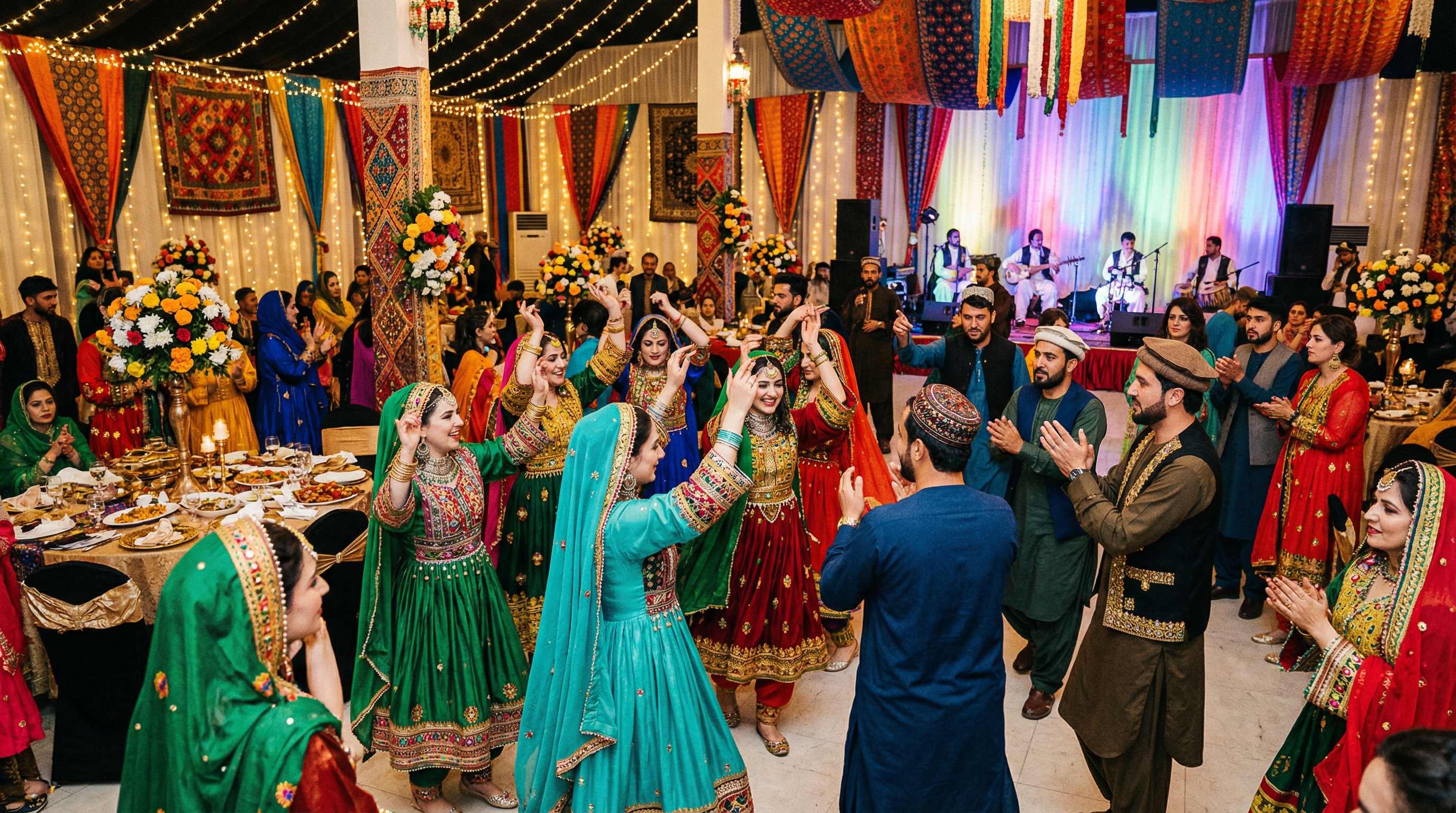
An Afghan wedding is one of the most dazzling cultural celebrations in the world — multi-day events filled with music, henna, elaborate feasts, and breathtaking traditional dress. Whether you are the bride, a close family member, or a guest attending for the first time, knowing what to wear is both an act of respect and an opportunity to celebrate Afghan beauty at its most vibrant.
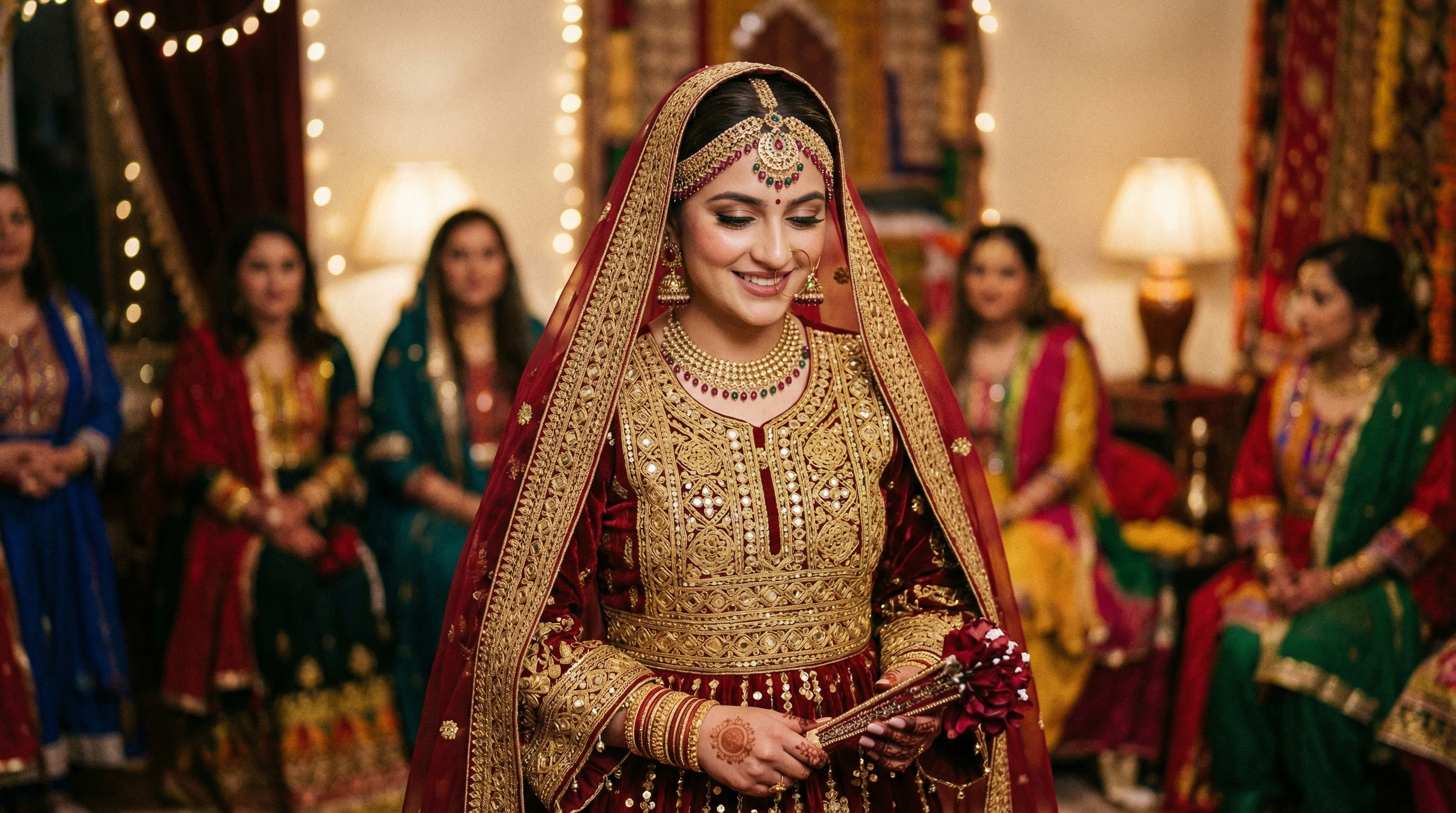
- Brides traditionally wear deep red or crimson for the main reception, with gold embroidery and heavy jewelry.
- Guests wear formal, richly colored traditional Afghan dresses or elegant modest attire.
- Jewel tones — deep red, emerald, royal blue, gold — are the most celebrated colors for guests.
- Avoid white, black, or grey — these colors are associated with mourning in Afghan culture.
- Coverage matters: full-length dresses, covered shoulders, and modest necklines are the norm.
- Embroidery, beadwork, and fine jewelry elevate any outfit and are warmly welcomed.
01 — Afghan Wedding Overview
Afghan weddings are not a single event — they are a series of celebrations, each with its own atmosphere, customs, and dress expectations. From the intimate henna night (shab-e-henna) to the grand reception (shab-e-arosi), the dress code shifts in formality and richness. Understanding which occasion you are attending is the first step to dressing appropriately and beautifully.
Afghan wedding fashion draws from a rich heritage of hand-embroidery, silk fabrics, intricate beadwork, and metallic threadwork refined over centuries. The colours are intentional — each carries cultural meaning rooted in folklore, prosperity, and celebration. In the diaspora, modern Afghan weddings often blend traditional garments with contemporary styling, creating a vibrant fusion that honours both heritage and present-day elegance.
Afghan weddings can last two to four days. Each day has its own occasion — from the family gathering (mehmooni) and henna ceremony (shab-e-henna) to the nikah and the grand reception (shab-e-arosi). Dress formality increases with each event, reaching its peak at the reception.
02 — The Bride: What to Wear
The Afghan bride is the most adorned figure at the wedding. Her outfit is carefully chosen to embody beauty, tradition, and family prestige. While modern Afghan brides increasingly incorporate personal style, certain elements remain central to the traditional bridal look.
A floor-length dress in deep red or crimson (surkh) with extensive gold zardozi embroidery. Paired with a matching dupatta (headscarf), intricate gold jewelry — choker, earrings, maang tikka — and elaborate henna on hands and feet.
Typically a green outfit (symbolising new beginnings and paradise) in lighter fabric. Less heavily embroidered than the reception dress, but still beautifully ornamented. Often gifted by the groom's family.
Many brides today wear a white or ivory gown for the nikah ceremony, changing into traditional dress for the reception. This blending of Western and Afghan tradition is widely accepted in diaspora weddings.
The Afghan bridal dress is not merely clothing — it is an heirloom, a statement of heritage, and a gift to future generations who will know their family once wore it with pride.
— Afghan bridal tradition03 — Guests: Dress Code & Etiquette
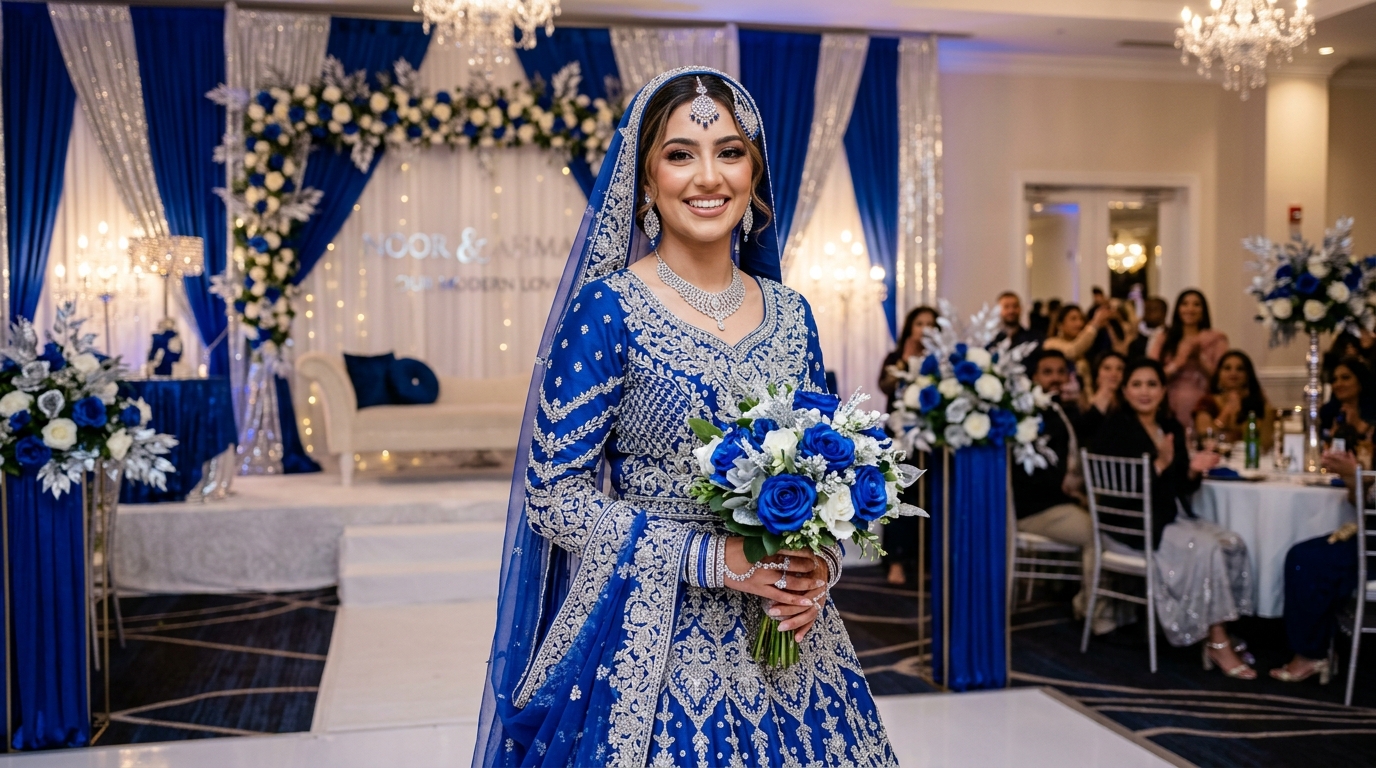
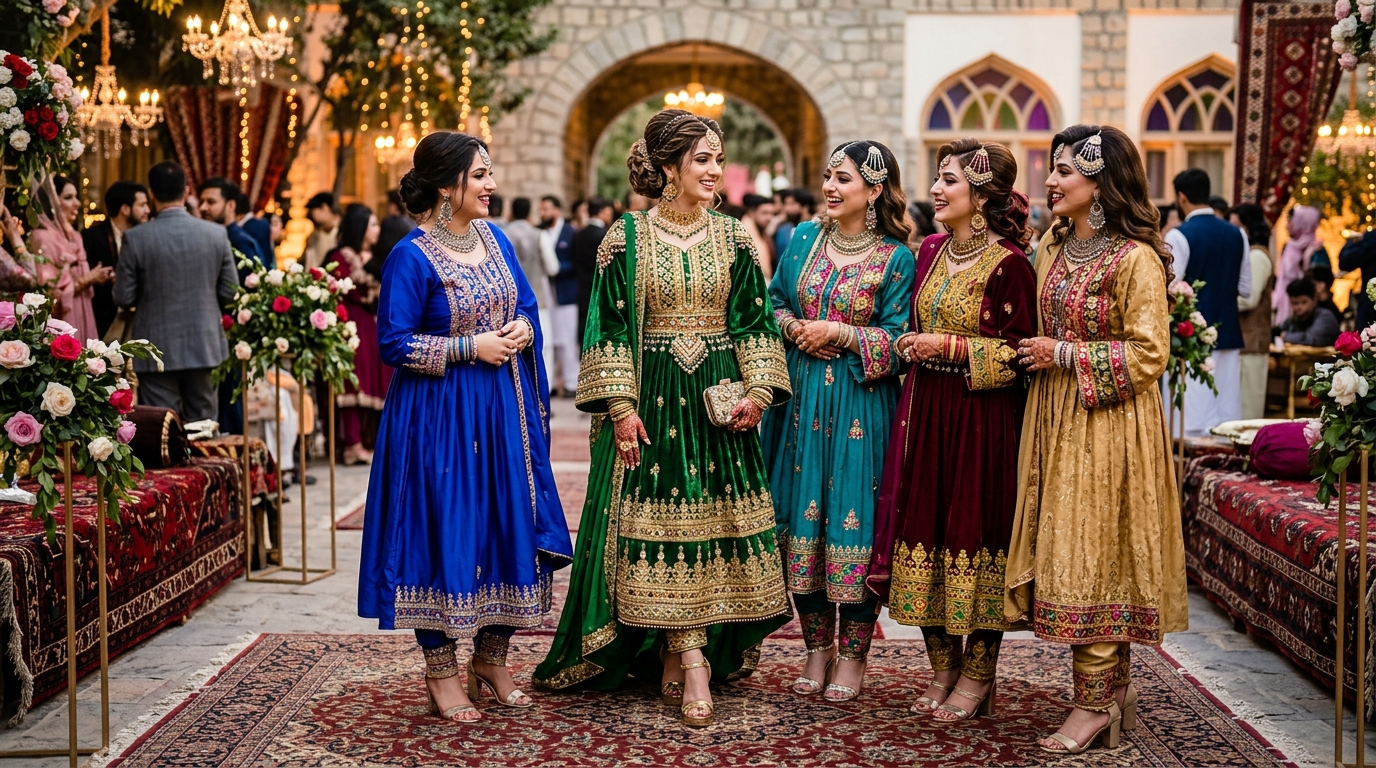
As a guest at an Afghan wedding, your outfit communicates respect for the family and enthusiasm for the occasion. The expectation is formality — not casual Western dress. A beautifully embroidered Afghan dress, an elegant shalwar kameez, or a formal modest gown all make excellent choices.
A full-length embroidered Afghan dress in a rich jewel tone. The embroidery shows effort and cultural appreciation. Pair with gold jewelry and a fine dupatta or shawl for the complete look.
A beautifully tailored shalwar kameez in silk or chiffon is always appropriate. Choose rich colors with embroidered details on the neckline or sleeves. Add a matching dupatta for elegance.
At diaspora Afghan weddings, a modest formal gown (full-length, covered shoulders) in a celebratory colour is acceptable. Avoid anything too revealing or casual — formality is always the right direction.
04 — Colors & Symbolism
Color is never accidental at an Afghan wedding. Each hue carries centuries of cultural meaning, and choosing the right color for your outfit is a form of participation in the celebration's deeper significance. Here are the most celebrated wedding colors and what they represent.
White and light ivory are associated with mourning and should be avoided by guests. Black is also traditionally worn for funerals and is generally not worn at Afghan weddings, though diaspora events are more flexible. When in doubt, choose a rich jewel tone — you cannot go wrong.
05 — Ceremony by Occasion
Each stage of an Afghan wedding has its own character and its own dress expectations. Here is your guide to dressing for every occasion from the first gathering to the grand reception.
The first meeting of the two families. Dress is smart-casual to semi-formal — a well-tailored outfit in a gentle jewel tone. Save your most elaborate dress for later celebrations.
A joyful, music-filled evening centred on the bride's henna application. Semi-formal attire in green, gold, or pink is traditional for this occasion. Light embroidery is appropriate.
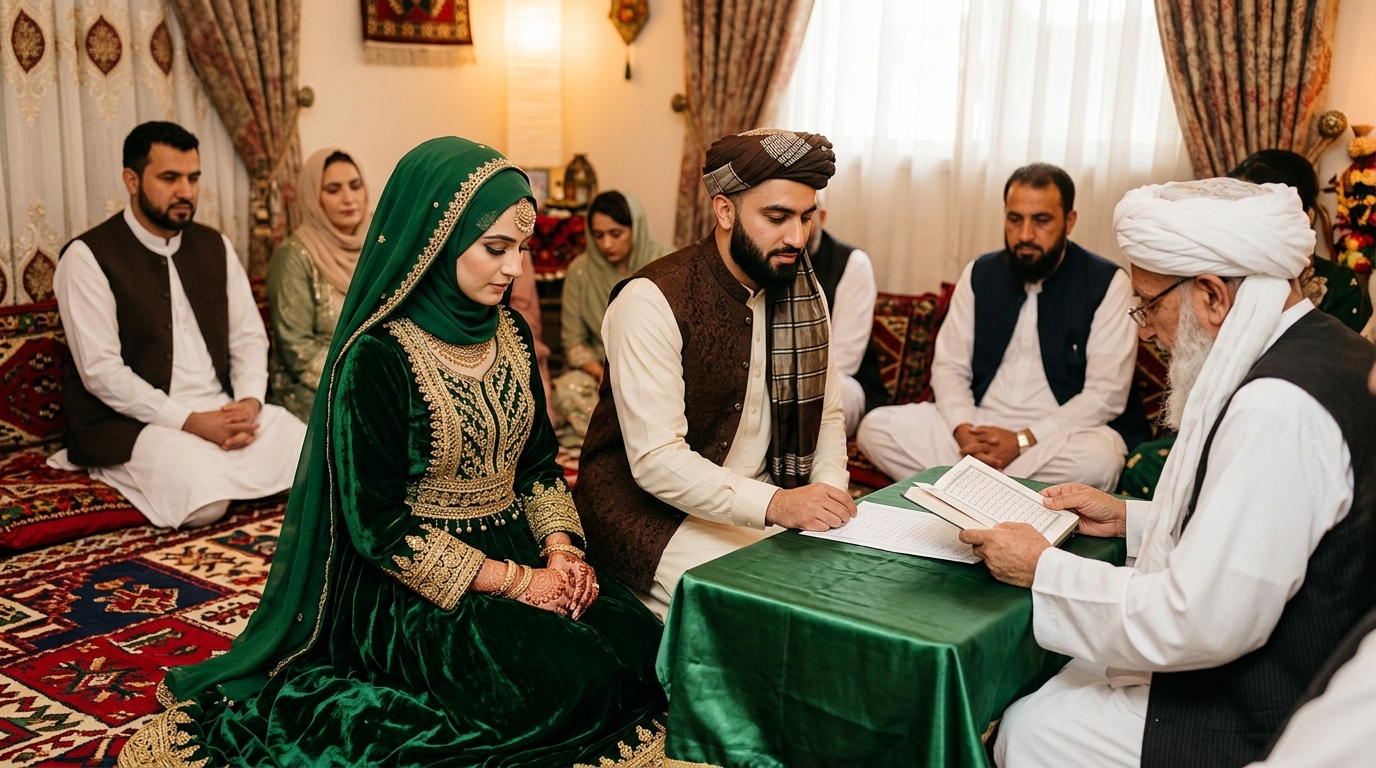
The religious ceremony — more solemn and intimate. Modesty is especially important here. A formal traditional outfit with a dupatta covering the hair is ideal for women.
The grandest celebration of the wedding. This is the occasion for your most elaborate outfit — full embroidery, statement jewelry, finest fabric. No amount of elegance is too much.
Smaller gatherings in the days following the wedding. Smart-casual to semi-formal is appropriate. A simpler Afghan dress or elegant shalwar kameez works beautifully.
06 — Do's and Don'ts
Dressing for an Afghan wedding is about celebration and respect in equal measure. These practical guidelines will help you navigate the dress code with confidence.
- Wear rich, celebratory jewel tones
- Choose full-length or maxi-length dresses
- Add embroidered or beaded accents
- Wear gold or silver jewelry generously
- Cover shoulders with a shawl or dupatta
- Dress up — more formal is always better
- Match the elegance of the occasion
- Wear white, ivory, or pale cream
- Wear black (especially at traditional events)
- Dress casually or in Western daywear
- Wear revealing necklines or short hemlines
- Outshine the bride with heavy gold bridal embroidery
- Underdress — it signals disrespect
- Wear bright patterns that clash with tradition
07 — Shopping for Afghan Wedding Fashion
Finding the right outfit for an Afghan wedding requires planning. Traditional Afghan dresses often require tailoring and embroidery time, so it is important to start shopping at least 4–6 weeks before the wedding. Here is how Afghan wedding guests typically allocate their fashion budget.
Order your dress 4–6 weeks before the wedding to allow time for tailoring and any embroidery customisation. Traditional embroidery by skilled artisans can take 2–3 weeks alone. For ready-to-wear options, browse collections 2–3 weeks in advance to allow for shipping and any minor alterations.
08 — Frequently Asked Questions
Common questions from guests and brides preparing for Afghan weddings — answered with cultural sensitivity and practical advice.
Browse Diyana Boutique's collection of handcrafted Afghan dresses — perfect for weddings, formal occasions, and cultural celebrations.