کد پوشاک عروسی افغانی ۲۰۲۶:
مهمانان، عروسها و خانوادهها چه بپوشند؟
عروسها، مهمانان و خانوادهها — همه آنچه برای لباس زیبا در عروسی افغانی نیاز دارید.
عروسی افغانی یکی از درخشانترین جشنهای فرهنگی در جهان است — رویدادهای چند روزه پر از موسیقی، حنا، ضیافتهای باشکوه و لباسهای سنتی بینظیر. چه عروس باشید، عضو نزدیک خانواده، یا مهمانی که برای اولین بار شرکت میکنید، دانستن اینکه چه بپوشید هم نشانه احترام است و هم فرصتی برای جشن گرفتن زیبایی افغانی در اوج شکوفاییاش.
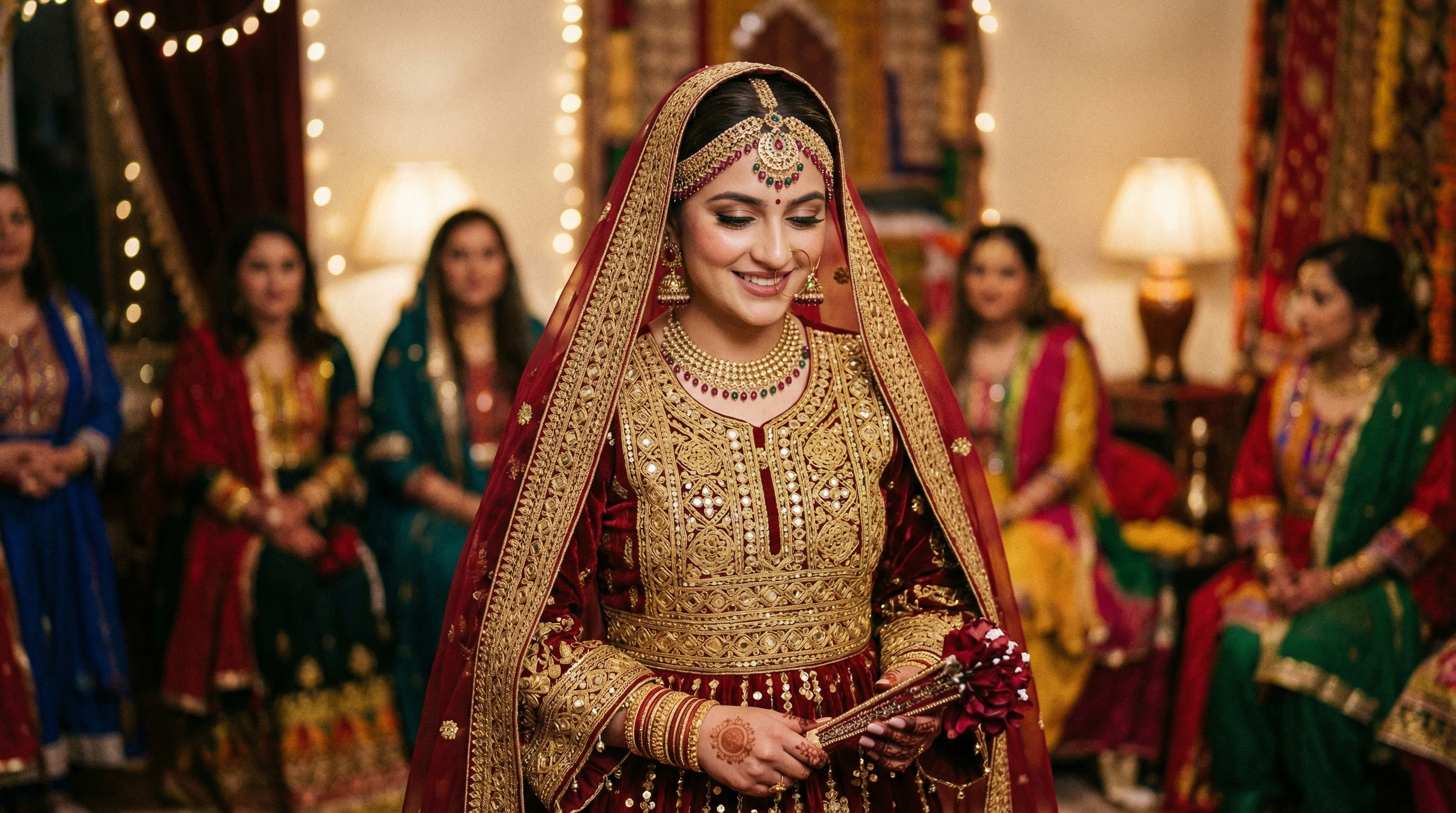
- عروسها به طور سنتی برای مجلس اصلی رنگ قرمز تیره یا زرشکی با گلدوزی طلایی و جواهرات سنگین میپوشند.
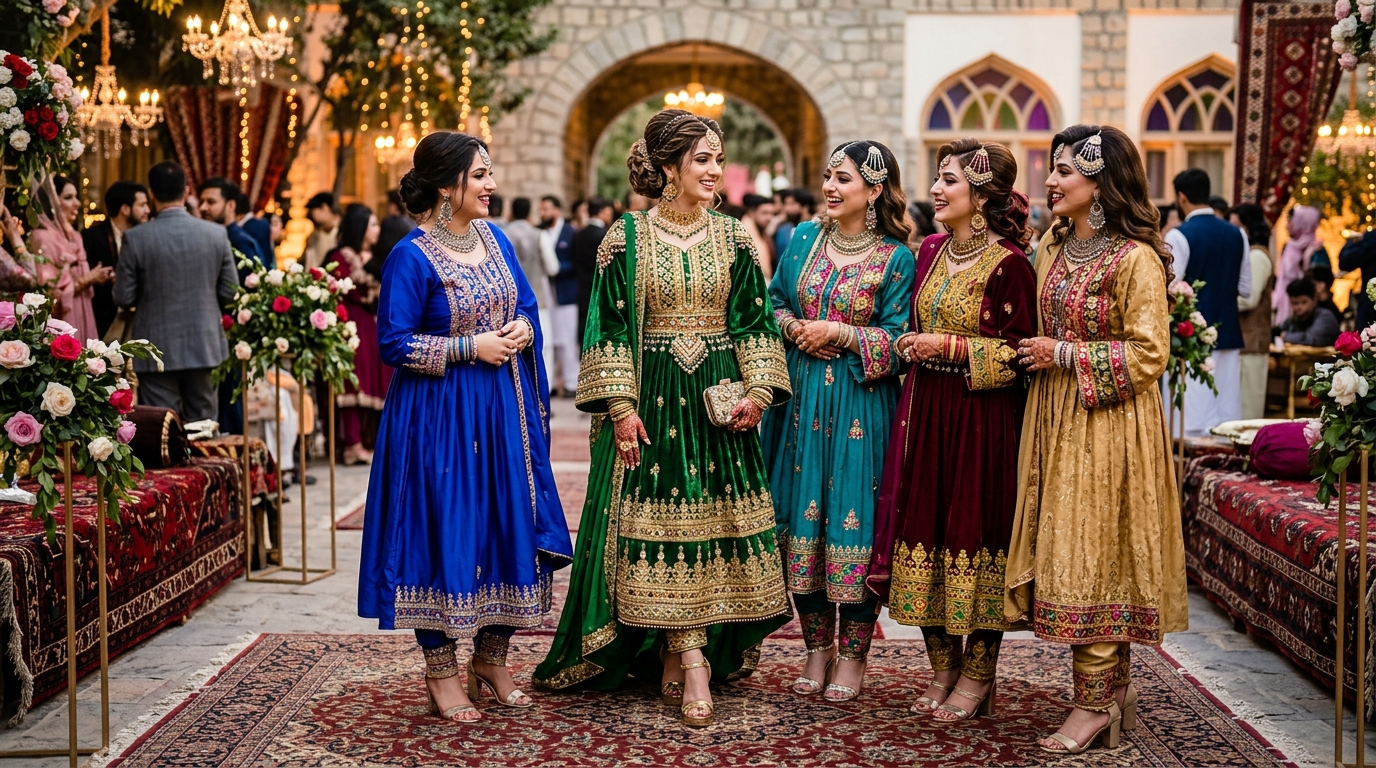
- مهمانان لباسهای رسمی افغانی با رنگهای شاد یا لباسهای محجوب و زیبا میپوشند.
- رنگهای جواهرگونه — قرمز تیره، زمرد، آبی سلطنتی، طلایی — محبوبترین رنگها برای مهمانان هستند.
- از سفید، سیاه یا خاکستری خودداری کنید — این رنگها در فرهنگ افغانی با عزا مرتبطاند.
- پوشش اهمیت دارد: لباسهای بلند تا مچ پا، شانههای پوشیده و یقههای محجوب رایج است.
- گلدوزی، مرواریددوزی و جواهرات ظریف هر لباسی را ارتقا میدهند و کاملاً مورد استقبال قرار میگیرند.
01 — مروری بر عروسی افغانی
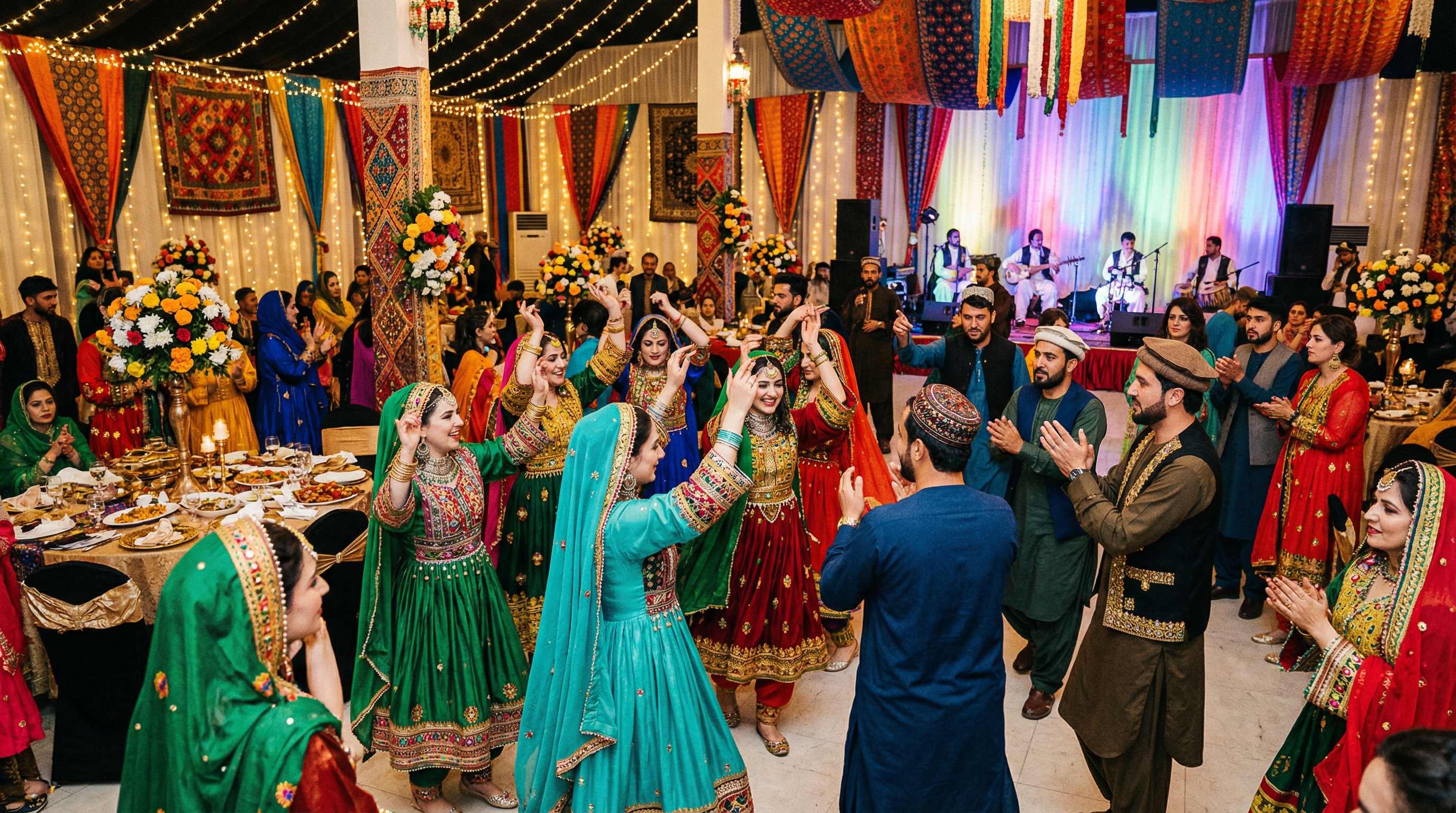
عروسیهای افغانی یک رویداد واحد نیستند — آنها یک سری جشناند که هر کدام فضا، رسوم و انتظارات لباس پوشیدن خاص خود را دارند. از شب حنا تا مجلس بزرگ (شب عروسی)، کد لباس از نظر رسمی بودن و شکوهمندی تغییر میکند. درک اینکه در کدام مناسبت شرکت میکنید اولین قدم برای لباس پوشیدن مناسب و زیباست.
مد عروسی افغانی از میراث غنی گلدوزی دستدوز، پارچههای ابریشمی، مرواریددوزیهای پیچیده و نخهای فلزی که طی قرنها تکامل یافتهاند الهام میگیرد. رنگها عمدی هستند — هر رنگ معنای فرهنگی ریشهداری در فولکلور، ثروت و جشن دارد. در خارج از کشور، عروسیهای مدرن افغانی اغلب لباسهای سنتی را با سبک معاصر ترکیب میکنند و تلفیق شادابآوری میآفرینند که هم میراث و هم ظرافت امروزی را گرامی میدارد.
عروسیهای افغانی میتوانند دو تا چهار روز طول بکشند. هر روز مناسبت خاص خود را دارد — از گردهمایی خانوادگی (مهمانی) و مراسم حنا (شب حنا) تا نکاح و مجلس بزرگ (شب عروسی). رسمی بودن لباس با هر مناسبت افزایش مییابد و در مجلس اصلی به اوج خود میرسد.
02 — عروس: چه بپوشد
عروس افغانی باشکوهترین شخص در عروسی است. لباس او با دقت انتخاب میشود تا زیبایی، سنت و اعتبار خانوادگی را تجسم بخشد. در حالی که عروسهای مدرن افغانی بهطور فزایندهای سبک شخصی خود را وارد میکنند، عناصر خاصی در لُک سنتی عروس محوری باقی میمانند.
یک لباس تا کف در رنگ قرمز تیره یا زرشکی (سرخ) با گلدوزی گسترده زردوزی طلایی. همراه با دوپاتای هماهنگ، جواهرات طلایی پیچیده — چوکر، گوشواره، ماانگتیکا — و حنای تفصیلی روی دستها و پاها.
معمولاً یک لباس سبز (نماد آغاز جدید و بهشت) از پارچه سبکتر. گلدوزی کمتر از لباس مجلس، اما هنوز زیبا تزئینشده. اغلب هدیهای از خانواده داماد است.
بسیاری از عروسها امروزه برای مراسم نکاح لباس سفید یا عاج میپوشند و برای مجلس به لباس سنتی تعویض میکنند. این ترکیب سنت غربی و افغانی در عروسیهای خارج از کشور به طور گسترده پذیرفته شده است.
لباس عروس افغانی صرفاً پوشاک نیست — یک میراث است، بیانیهای از هویت، و هدیهای به نسلهای آینده که خواهند دانست خانوادهشان زمانی آن را با افتخار پوشیده است.
— سنت عروسی افغانی03 — مهمانان: کد لباس و آداب
به عنوان مهمان در عروسی افغانی، لباس شما احترام به خانواده و اشتیاق برای مناسبت را نشان میدهد. انتظار رسمی بودن است — نه لباسهای معمولی غربی. یک لباس افغانی گلدوزیشده زیبا، یک شلوار قمیص زیبا، یا یک لباس رسمی محجوب همه گزینههای عالی هستند.
یک لباس افغانی گلدوزیشده بلند تا مچ پا در رنگ جواهرگونه تیره. گلدوزی تلاش و ارزشگذاری فرهنگی را نشان میدهد. با جواهرات طلایی و یک دوپاتا یا شال ظریف برای تکمیل لک ترکیب کنید.
یک شلوار قمیص خوب دوختهشده از ابریشم یا شیفون همیشه مناسب است. رنگهای تیره را با جزئیات گلدوزیشده روی یقه یا آستین انتخاب کنید. یک دوپاتای هماهنگ برای ظرافت اضافه کنید.
در عروسیهای افغانی خارج از کشور، یک لباس رسمی محجوب (بلند تا کف، شانههای پوشیده) در رنگ جشنی قابل قبول است. از هر چیزی که خیلی نازک یا معمولی است خودداری کنید — رسمی بودن همیشه جهت درستی است.
04 — رنگها و نمادگرایی
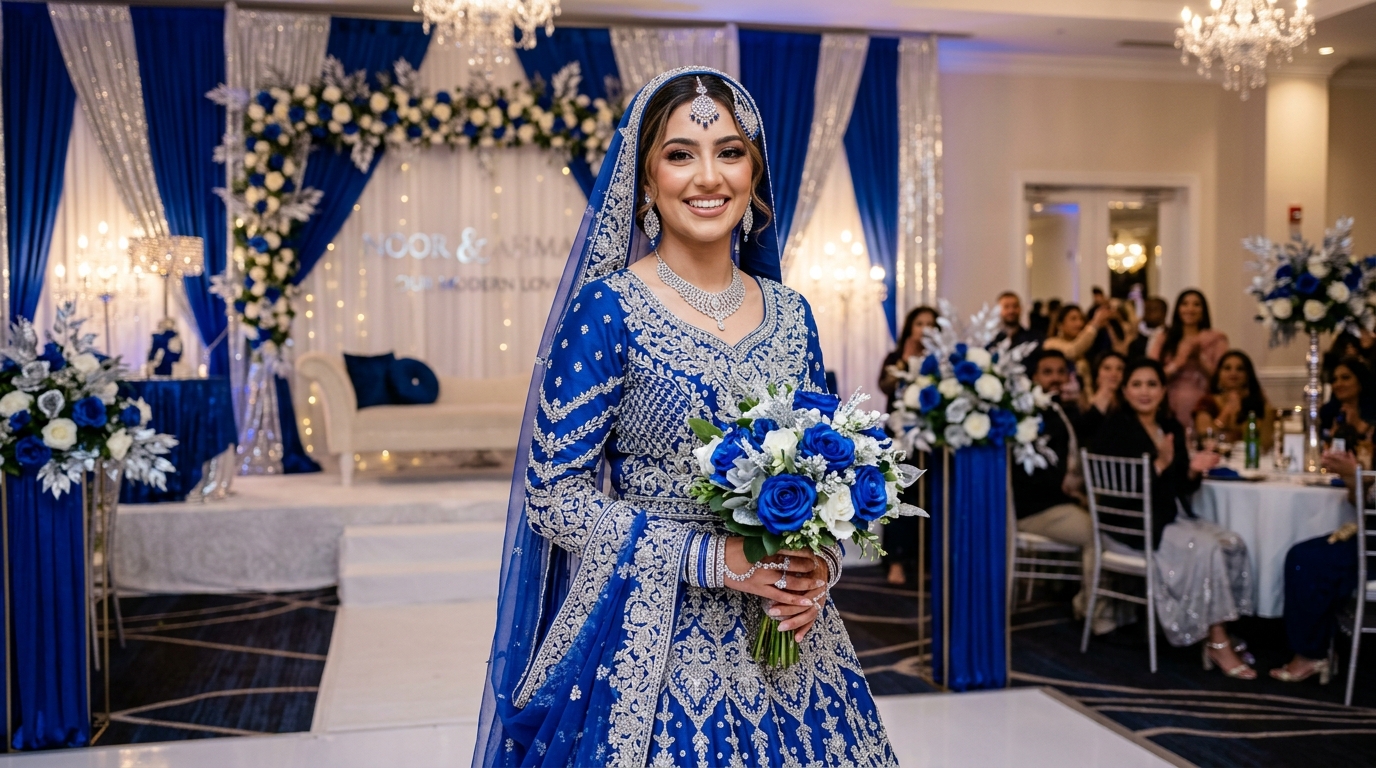
رنگ در عروسی افغانی هرگز تصادفی نیست. هر رنگ قرنها معنای فرهنگی دارد و انتخاب رنگ مناسب برای لباستان نوعی مشارکت در معنای عمیقتر جشن است. اینجا محبوبترین رنگهای عروسی و معنای آنها را بیابید.
سفید و عاج روشن با عزا مرتبطاند و مهمانان باید از آنها خودداری کنند. سیاه نیز به طور سنتی در مراسم تدفین پوشیده میشود و معمولاً در عروسیهای افغانی رایج نیست، اگرچه رویدادهای خارج از کشور انعطافپذیرتر هستند. در صورت شک، یک رنگ جواهرگونه تیره انتخاب کنید — اشتباه نمیکنید.
05 — مراسم بر اساس مناسبت
هر مرحله از عروسی افغانی شخصیت و انتظارات لباس خاص خود را دارد. اینجا راهنمای لباس پوشیدن برای هر مناسبت از اولین گردهمایی تا مجلس بزرگ است.
اولین دیدار دو خانواده. لباس نیمهرسمی — یک لباس مناسب با رنگ ملایم جواهرگونه. گرانبهاترین لباستان را برای جشنهای بعدی نگه دارید.
یک شب شاد و پر از موسیقی در تقدیر از حنابندی عروس. لباس نیمهرسمی در رنگهای سبز، طلایی یا صورتی سنتی برای این مناسبت مناسب است. گلدوزی سبک مناسب است.
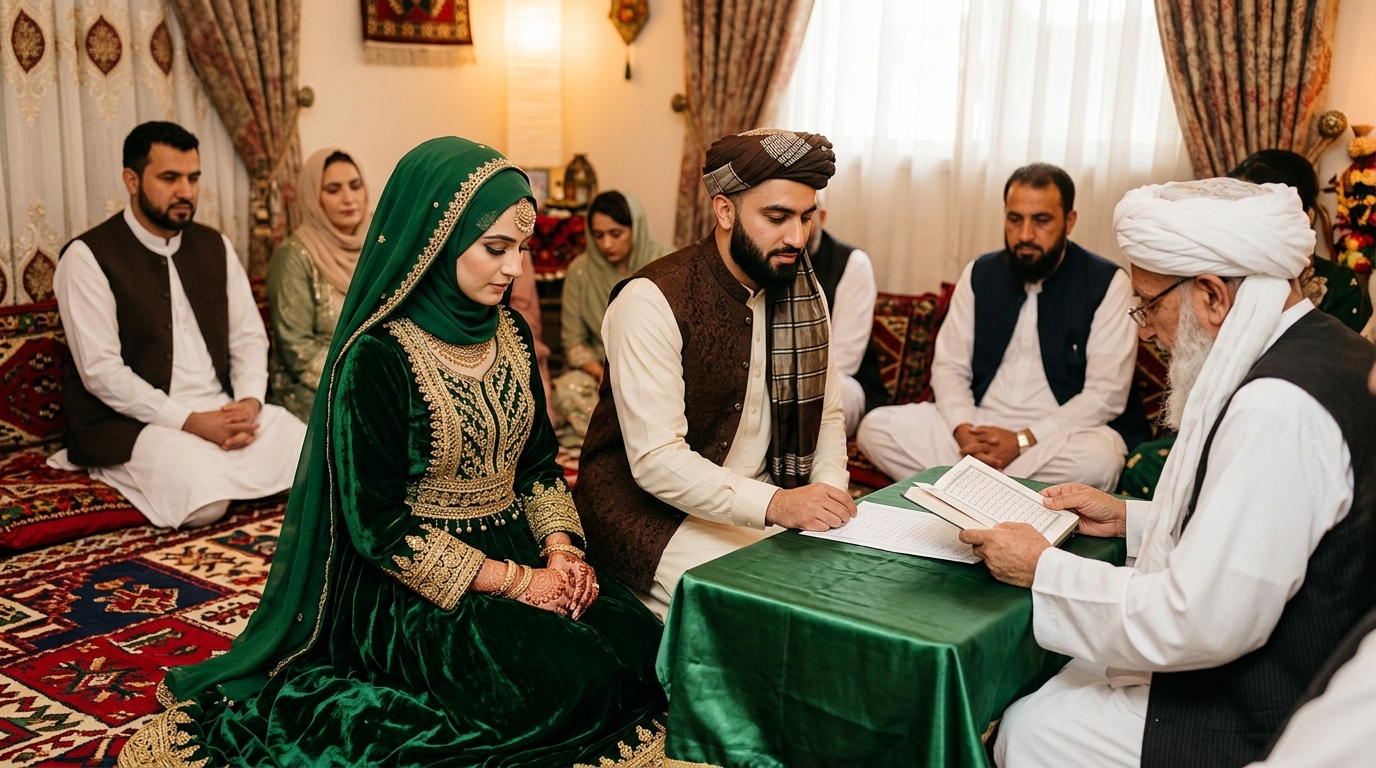
مراسم دینی — رسمیتر و خصوصیتر. در اینجا حجاب اهمیت ویژهای دارد. یک لباس سنتی رسمی با دوپاتایی که موها را میپوشاند برای زنان ایدهآل است.
باشکوهترین جشن عروسی. این مناسبت برای پوشیدن گرانقیمتترین لباستان است — گلدوزی کامل، جواهرات درخشان، بهترین پارچه. هیچ میزانی از ظرافت زیاد نیست.
گردهماییهای کوچکتر در روزهای پس از عروسی. نیمهرسمی مناسب است. یک لباس افغانی سادهتر یا شلوار قمیص زیبا خوب مینشیند.
06 — بایدها و نبایدها
لباس پوشیدن برای عروسی افغانی به میزان مساوی جشن گرفتن و احترام است. این راهنماهای عملی به شما کمک میکنند کد لباس را با اعتماد بهنفس دنبال کنید.
- رنگهای شاد و جشنی جواهرگونه بپوشید
- لباسهای بلند تا کف یا ماکسی انتخاب کنید
- تزئینات گلدوزی یا مرواریددوزی اضافه کنید
- جواهرات طلایی یا نقرهای را فراوان بپوشید
- شانهها را با شال یا دوپاتا بپوشانید
- لباس رسمی بپوشید — رسمیتر همیشه بهتر است
- خود را با شکوه مناسبت هماهنگ کنید
- سفید، عاج یا کرم کمرنگ نپوشید
- سیاه نپوشید (بهویژه در مناسبتهای سنتی)
- لباس معمولی یا روزمره غربی نپوشید
- یقههای باز یا دامنهای کوتاه نپوشید
- با گلدوزی طلایی سنگین با عروس رقابت نکنید
- ساده نپوشید — نشانه بیاحترامی است
- طرحهای زنندهای که با سنت ناهماهنگ است نپوشید
07 — خرید برای مد عروسی افغانی
یافتن لباس مناسب برای عروسی افغانی نیازمند برنامهریزی است. لباسهای سنتی افغانی اغلب به زمان برای دوخت و گلدوزی نیاز دارند، بنابراین مهم است که حداقل ۴-۶ هفته قبل از عروسی خرید را شروع کنید. اینجا میبینید مهمانان عروسی افغانی چطور بودجه مد خود را توزیع میکنند.
لباستان را ۴-۶ هفته قبل از عروسی سفارش دهید تا وقت برای دوخت و هر گونه سفارشیسازی گلدوزی داشته باشید. گلدوزی سنتی توسط صنعتگران ماهر به تنهایی ۲-۳ هفته طول میکشد. برای گزینههای آمادهپوش، ۲-۳ هفته قبل در کالکشنها بگردید تا وقت برای ارسال و هر گونه تغییر جزئی داشته باشید.
08 — سوالات متداول
سوالات رایج از مهمانان و عروسهایی که برای عروسیهای افغانی آماده میشوند — با حساسیت فرهنگی و توصیههای عملی پاسخ داده شدهاند.
کالکشن لباسهای دستساز افغانی دیانا بوتیک را کاوش کنید — مناسب برای عروسیها، مناسبتهای رسمی و جشنهای فرهنگی.