Afghan Bridal Trousseau 2026:
The Complete Outfit Checklist
Everything an Afghan bride needs — from Khastegari to Walima — with color guide, budget tiers, and shopping timeline.
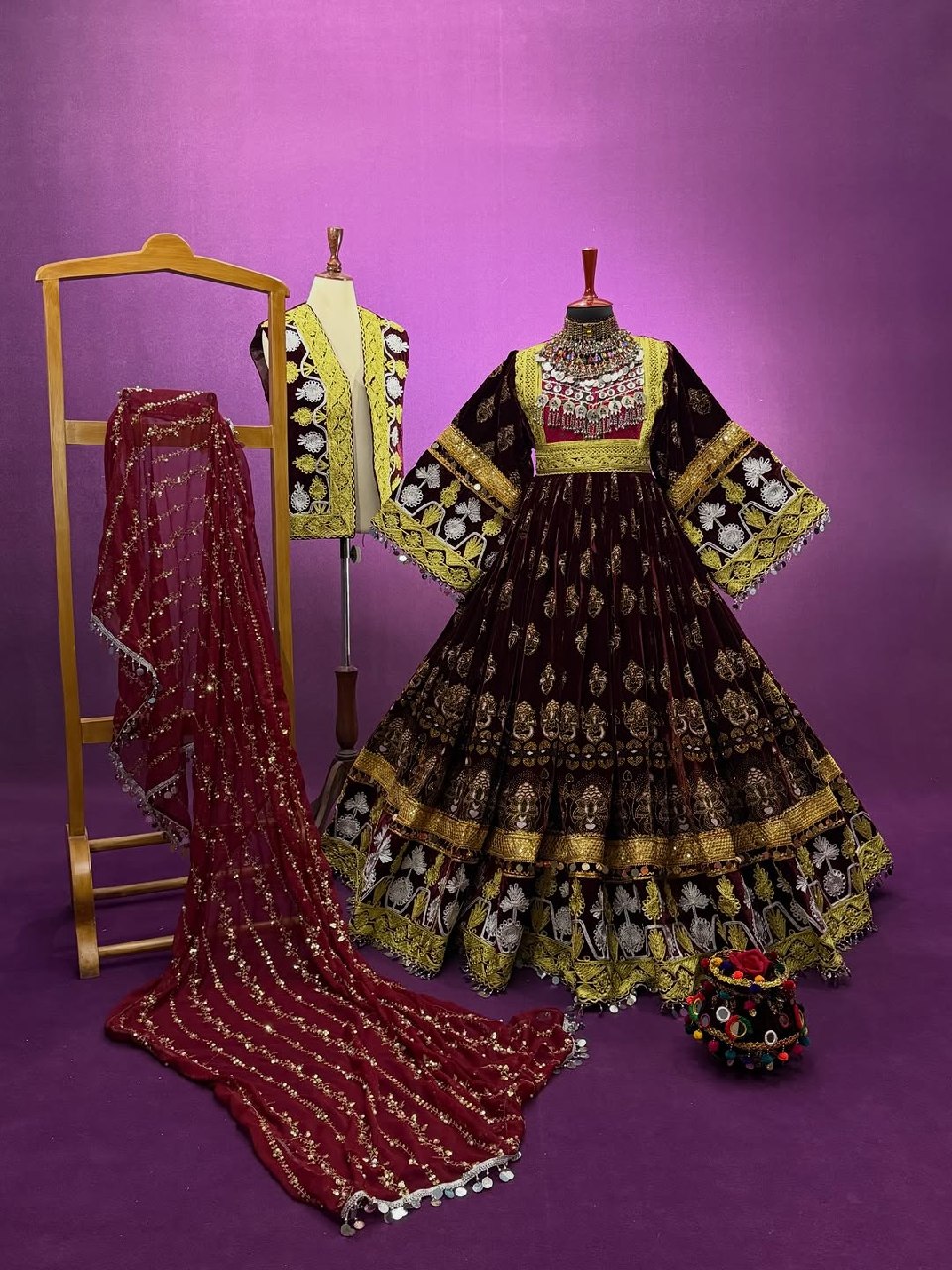
The Afghan bridal trousseau — known as jahaz (جهاز) — is one of the most significant preparations in Afghan wedding culture. This collection of outfits and belongings is assembled not only for the wedding celebrations but for the bride's new life. Every dress represents an occasion; every colour carries meaning.
- Minimum 5 outfits — one for each main wedding occasion
- Occasions: Khastegari, Nikah, Mehndi (henna night), Aroosi, Walima
- Aroosi dress: deep red with gold embroidery — the centrepiece
- Mehndi dress: green — the most traditional choice for henna night
- Budget: from €400 (basic) to €4,500+ (grand)
- Start shopping 16 weeks before the wedding
01 — What Is the Trousseau (Jahaz)?
The trousseau — jahaz (جهاز) in Dari — is the collection of dresses, jewelry, and household items assembled by the bride's family before the wedding. This tradition has deep roots in Afghan culture, symbolising love, family pride, and the bride's preparedness for her new life.
In Afghan culture, the trousseau is more than clothing — it represents the standing and care of the bride's family. The more complete and high-quality the trousseau, the greater the love displayed. Today, modern brides focus more on the quality of a few exceptional pieces over sheer quantity.
The trousseau is not merely clothing — it is a family's gift to a daughter for the life she is beginning.
— Afghan tradition02 — How Many Outfits Do You Need?
An Afghan bride needs at minimum 5 outfits — one for each main occasion. Many brides prepare 7–10, however, to cover smaller celebrations, family visits after the wedding, and post-wedding gatherings.
One for each main occasion: Khastegari, Nikah, Mehndi, Aroosi, and Walima.
Including additional outfits for pre-wedding events and post-wedding family visits.
Complete trousseau with an outfit for every occasion, visit, and special ceremony.
03 — The Five Wedding Occasions
Afghan weddings are not a single event — they are a series of multi-day celebrations, each with its own atmosphere, customs, and dress expectations. Here are the five main occasions and their traditional colors.
The first formal meeting of both families. Modest and elegant; choose deep jewel tones.
The religious ceremony — solemn and intimate. Full modest outfit with dupatta.
The festive henna evening. Bride wears green; guests wear vibrant celebratory colors.
The grandest night. Full traditional dress with gold zardozi embroidery.
Hosted by the groom's family. Semi-formal and joyfully celebratory.
In some Afghan families, the Mehndi night dress (the green outfit) is gifted to the bride by the groom's family. This beautiful tradition symbolises the bride's welcome into her new family. Discuss this in advance to avoid overlap in planning.
04 — Complete Trousseau Checklist
This comprehensive checklist covers everything an Afghan bride needs for her trousseau. From formal wedding dresses to everyday home clothing — nothing forgotten.
05 — Color Guide by Occasion
In Afghan culture, colour is never accidental. Each hue carries deep meaning, and choosing the right colour for each occasion demonstrates cultural awareness. The most celebrated colours for the Afghan trousseau:
White, light ivory, and grey are associated with mourning in Afghan culture and should be avoided. Black is also traditionally unsuitable for joyful celebrations, though diaspora weddings are more flexible.
06 — Budget Guide
The trousseau budget depends on the number of dresses, quality of embroidery, fabric choice, and jewelry selection. Here are the four most common budget tiers:
One to two ready-to-wear dresses, simple jewelry, basic dupattas.
Three to four embroidered dresses, beautiful jewelry set.
Five custom-embroidered dresses, gold jewelry, full traditional look.
Complete luxury trousseau with real gold jewelry set.
07 — The 16-Week Shopping Timeline
Assembling an Afghan trousseau takes time — especially for dresses with traditional embroidery. This 16-week timeline helps ensure everything is ready on time.
Set your budget, take your measurements. Write a complete list of all outfits needed.
Order custom-embroidered dresses (especially the Aroosi dress). Traditional embroidery takes 3–4 weeks.
Buy ready-to-wear pieces, jewelry, bags, and shoes. Allow enough time for delivery.
Try on all pieces. Hand in any alterations to your tailor. Match dupattas and accessories.
Organise and pack the trousseau. Book hair and makeup. Set aside jewelry for each outfit.
08 — Do's and Don'ts
These guidelines help you avoid common trousseau mistakes and make the best choices for every occasion.
- Start planning 16 weeks before the wedding
- Prioritise quality for the Aroosi dress above all
- Know the traditional colors for each occasion
- Prepare matching jewelry for every outfit
- Take precise measurements before ordering
- Set a realistic, flexible budget
- Use experienced tailors familiar with Afghan styles
- Don't wait until the last minute — embroidery takes weeks
- Don't wear white or pale ivory (associated with mourning)
- Don't buy too-similar dresses for different occasions
- Don't sacrifice Aroosi dress quality for a lower price
- Don't forget jewelry and dupattas after buying the dresses
- Don't order online without taking precise measurements first
09 — Frequently Asked Questions
Answers to common questions from Afghan brides and families about assembling the trousseau.
Diyana Boutique's collection of authentic Afghan dresses with handcrafted embroidery — perfect for every wedding occasion. Worldwide delivery.